Skip to Content
SR Engineering Works
  • Home
  • Browse offerings
  • Our companies
    • SR Heavy Engineering
    • Ankita's Makeover
    • SR Holidays & Logistics
  • Shop
  • Complete video conferencing solution
  • Apparels
  • Events
  • Courses
  • Pricing
  • Company
    • News
    • Success Stories
    • About Us
  • Help
  • Appointment
  • Contact us
  • Help
  • Build a home
  • Courier page
  • Massage chairs
  • Help
  • Jobs
  • Holidays
  • softwares
  • Paints
  • Golf cart
  • Safety
  • Professional printing services
  • Handmade candles, chocolates
  • Courier
  • Plant design
  • Virtual GST
  • Build your home
  • 0
  • 0
  • +91 90787-13017
  • Follow us
  • বাংলা English (IN) हिंदी
  • Sign in
  • Contact Us
SR Engineering Works
  • 0
  • 0
    • Home
    • Browse offerings
    • Our companies
      • SR Heavy Engineering
      • Ankita's Makeover
      • SR Holidays & Logistics
    • Shop
    • Complete video conferencing solution
    • Apparels
    • Events
    • Courses
    • Pricing
    • Company
      • News
      • Success Stories
      • About Us
    • Help
    • Appointment
    • Contact us
    • Help
    • Build a home
    • Courier page
    • Massage chairs
    • Help
    • Jobs
    • Holidays
    • softwares
    • Paints
    • Golf cart
    • Safety
    • Professional printing services
    • Handmade candles, chocolates
    • Courier
    • Plant design
    • Virtual GST
    • Build your home
  • +91 90787-13017
  • Follow us
  • বাংলা English (IN) हिंदी
  • Sign in
  • Contact Us

We care
about results


Guided by expertise gained over 20 years of achieving success for clients, we practice with passion and strategic focus on the future.

Discover more Contact us

Fire triangle


Step into the future with our innovative solutions tailored to meet the unique needs of your business. Don’t let outdated processes hold you back any longer.

Discover more

What is Fire Load?Design features

What is Fire Load?


Fire load refers to the total quantity of combustible material in a space, indicating the potential fuel available for a fire. It is a critical factor in evaluating fire risk and designing effective fire protection measures.

Why is Fire Load Calculation Important?

  • Risk Assessment: Fire load calculations help determine the potential intensity and spread of a fire, enabling better risk assessment and mitigation strategies.
  • Fire Protection Design: Understanding fire load assists engineers in designing appropriate fire protection systems, such as sprinkler systems, firewalls, and evacuation plans.
  • Material Selection: Fire load calculations guide the selection of fire-resistant materials for construction and storage.

How to Calculate Fire Load?

  1. Identify Combustible Materials: Determine all combustible materials within the space, including furniture, textiles, electronics, chemicals, and flammable liquids.
  2. Quantify Materials: Measure the weight or volume of each combustible material.
  3. Determine Calorific Values: Obtain the calorific value (heat release rate) for each material (e.g., MJ/kg or kcal/kg).
  4. Calculate Total Fire Load: Multiply the weight (or volume) of each material by its calorific value and sum the results for all materials.
  5. Calculate Fire Load Density: Divide the total fire load by the area of the space to obtain the fire load density (MJ/m² or kcal/m²).

Example Formula:

  • Fire Load (MJ) = Mass (kg) x Calorific Value (MJ/kg)
  • Fire Load Density (MJ/m²) = Total Fire Load (MJ) / Area (m²)

Factors to Consider

  • Material Type: Different materials have varying calorific values and combustion characteristics.
  • Material Quantity: The amount of combustible material significantly impacts the fire load.
  • Ventilation: Proper ventilation can affect fire spread and intensity.
  • Storage Conditions: How materials are stored and stacked can influence combustibility.
  • Occupancy Type: Different occupancies (e.g., warehouses, factories, offices) have distinct fire load characteristics.

Fire Load Classification

Fire load can be classified into categories based on intensity, such as low, moderate, and high fire load. These classifications help determine the appropriate level of fire protection measures for a given space.

Design features


Our design features offer a range of tools to create visually stunning websites. Utilize WYSIWYG editors, drag-and-drop building blocks, and Bootstrap-based templates for effortless customization. With professional themes and an intuitive system, you can design with ease and precision, ensuring a polished, responsive result.


Building blocks system

Create pages from scratch by dragging and dropping customizable building blocks. This system simplifies web design, making it accessible to all skill levels. Combine headers, images, and text sections to build cohesive layouts quickly and efficiently.


Bootstrap-Based Templates

Design Odoo templates easily with clean HTML and Bootstrap CSS. These templates offer a responsive, mobile-first design, making them simple to customize and perfect for any web project, from corporate sites to personal blogs.

  • Lock Out Tag Out (LOTO)
  • Fire extinguisher
  • Contact

What is LOTO?

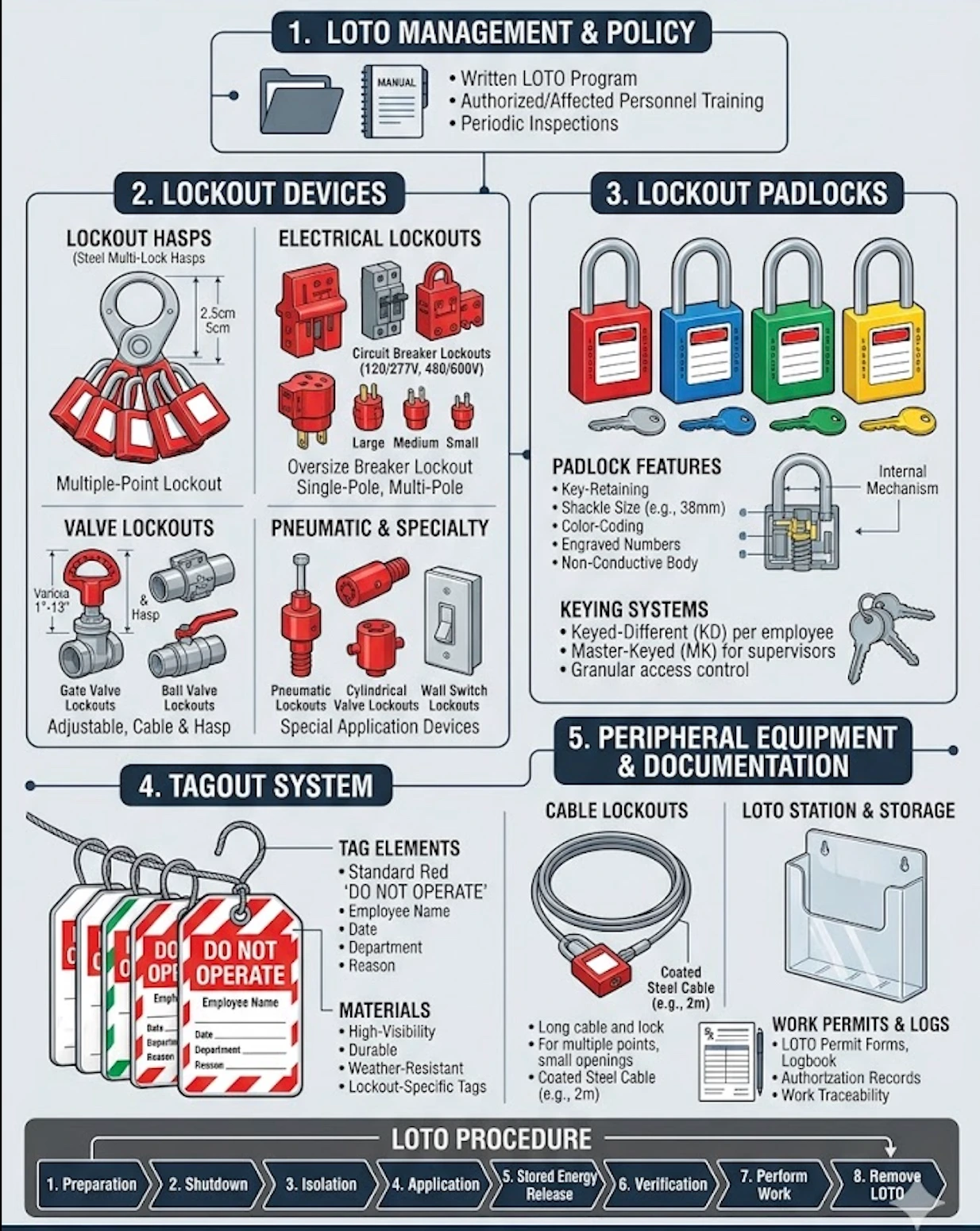
Lockout/Tagout (LOTO) is a safety procedure used to ensure that dangerous machines are properly shut off and not able to be started up again prior to the completion of maintenance or repair work. It involves isolating energy sources and locking them in the "off" position.

Origin and Inception

LOTO procedures were developed in response to the need for a standardized method to protect workers from the unexpected energization or startup of machines and equipment. The Occupational Safety and Health Administration (OSHA) in the United States established regulations for LOTO in the 1980s to address these concerns.

Role in Safety

LOTO plays a critical role in workplace safety by:

  • Preventing accidental machine start-up
  • Protecting workers from hazardous energy releases
  • Reducing the risk of workplace injuries and fatalities

Instruments and Equipment Associated with LOTO


Instrument Name


Description
Lockout Padlocks Used to secure the lockout devices in place
Lockout Hasps Allow multiple workers to lock out a single source
Valve Lockouts Securely lock out valves to prevent fluid flow
Circuit Breaker Lockouts Prevent circuit breakers from being switched on
Plug Lockouts Enclose electrical plugs to prevent use
Cable Lockouts Secure multiple energy isolation points

Padlock Colors and Usage

Padlock Color Usage
Red Indicates a lockout in progress
Yellow Used for caution, often for tagout only
Green Indicates equipment is safe to use
Blue Personal lockout, often used by contractors
Black Specific to a certain department or usage

When to Use LOTO

LOTO should be used during:

  • Maintenance and servicing of machinery
  • Installation of new equipment
  • Equipment cleaning that requires disassembly
  • Any situation where unexpected startup could occur

By implementing LOTO procedures, organizations can significantly reduce the risk of accidents and ensure a safer working environment.

Fire Extinguishers: A Comprehensive Guide

Fire extinguishers are essential safety devices designed to control and extinguish small fires in emergency situations. They are crucial in preventing the spread of fire and ensuring safety in both residential and commercial settings.

Types of Fire Extinguishers

Type Description Suitable For
Water Uses water to cool burning materials. Class A fires (wood, paper)
Foam Forms a blanket over the fire, smothering it. Class A and B fires
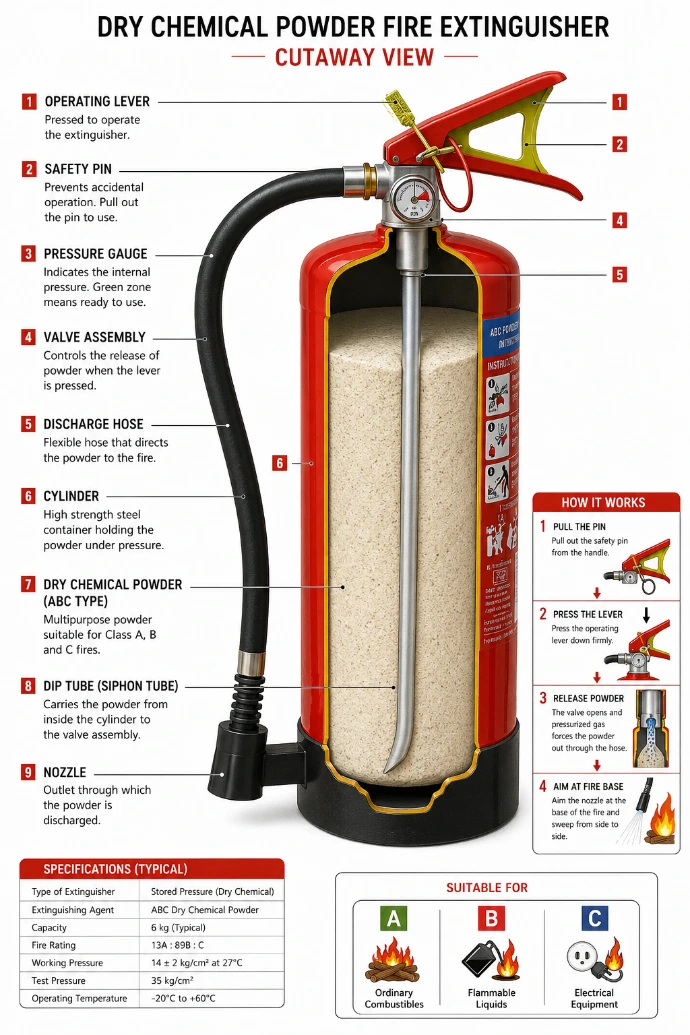
Dry Powder Extinguishes by separating the fuel from oxygen or removing the heat. Class A, B, and C fires
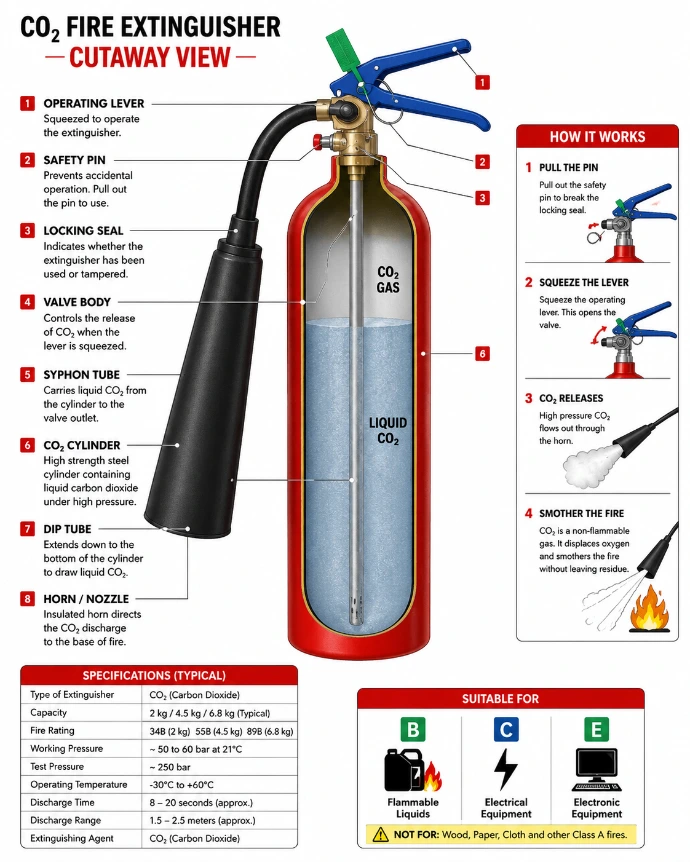
Carbon Dioxide Displaces oxygen, smothering the fire. Class B and electrical fires
Wet Chemical Cools and smothers the fire. Class K fires (cooking oils)

Inception and Relation to Safety

The concept of fire extinguishers dates back to the early 18th century, with modern designs evolving to meet various safety standards. They are pivotal in fire safety protocols, providing the first line of defense against fire outbreaks.

Testing Frequency

Fire extinguishers should be inspected monthly and serviced annually by a professional to ensure they are in working order. Hydrostatic testing should be conducted every 5 to 12 years depending on the type.

Color Codes

Color Code Type
Red Water
Cream Foam
Blue Dry Powder
Black Carbon Dioxide
Yellow Wet Chemical

Usage Scenarios

  • Class A Fires: Use water or foam extinguishers.
  • Class B Fires: Use foam, dry powder, or CO2 extinguishers.
  • Class C Fires: Use dry powder extinguishers.
  • Electrical Fires: Use CO2 extinguishers.
  • Class K Fires: Use wet chemical extinguishers.

Fire Extinguisher Models and Parts

  • Cylinder: Contains the extinguishing agent.
  • Handle and Lever: Used to operate the extinguisher.
  • Hose: Directs the extinguishing agent to the fire.
  • Pressure Gauge: Indicates if the extinguisher is charged.
  • Safety Pin: Prevents accidental discharge.

How to Use a Fire Extinguisher (PASS)

  1. Pull the Pin: Break the tamper seal.
  2. Aim Low: Point the nozzle at the base of the fire.
  3. Squeeze the Handle: Discharge the extinguisher.
  4. Sweep Side to Side: Cover the area of the fire..

Start with the customer – find out what they want and give it to them.

Navigation
  • About us
  • Our services
  • Our products
  • Terms and conditions  
  • Our offerings

  • History
  • Resources
  • Jobs
  • Contact
Support
  • Help
  • Terms of Service
  • All policies 
  • Knowledgebase
  • Shipping
  • Returns
  • Press

Click on "Edit" in the right panel to replace this with your own HTML code
About us

We are a team of passionate people whose goal is to improve everyone's life through disruptive products. We build great products to solve your business problems.

Our products are designed for small to medium sized companies willing to optimize their performance.


GSTIN.: 19CJHPB8326G1Z6

UDYAM Registration: UDYAM-WB-15-0095792

GeM seller ID.: JRQM250013659380


Follow us

Click here to setup your social networks
Click here to set up your social networks

Respecting your privacy is our priority.

Allow the use of cookies from this website on this browser?

We use cookies to provide an improved experience on this website. You can learn more about our cookies and how we use them in our Cookie Policy.

Allow all cookiesOnly allow essential cookies